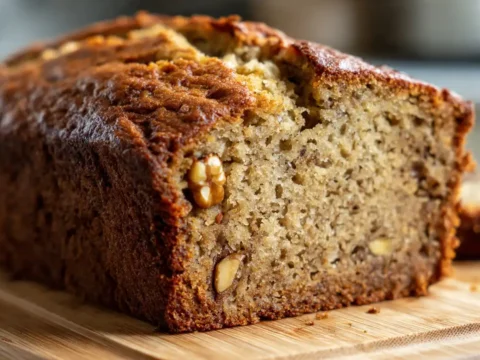
This classic banana bread recipe is honestly the only one I use anymore, and I’ve probably tested like fifteen different versions over the years. It’s nothing fancy—just straightforward, reliably moist banana bread that actually tastes like bananas and doesn’t turn into a brick after day two. I make this every time I have those sad, spotted bananas sitting on my counter making me feel guilty.
Table of Contents :
Why I Finally Stopped Recipe-Hopping
Okay, so here’s the thing about banana bread recipes—everyone claims theirs is “the best” but half of them are either too dense, too sweet, or honestly just taste like regular bread with a vague banana hint. I went through this whole phase where I was trying every viral recipe I saw on Pinterest, and most of them were disasters.
The worst one involved Greek yogurt and promised “bakery-style results” but came out with this weird tangy flavor and the texture of wet sand. Another one had like six different spices and you couldn’t even taste the bananas. I finally realized I was overcomplicating things. Sometimes the classic approach actually works better than all the fancy modifications.
My neighbor Linda makes incredible banana bread, and when I finally asked for her secret, she laughed and said she’d been using basically the same recipe since the 1980s. No tricks, no substitutions, just good ingredients and proper mixing. That’s when I stopped trying to reinvent the wheel.

Ingredients classic banana bread recipe
The ingredient list is pretty basic, but each thing matters more than you’d think. I learned this after making several mediocre loaves when I was being lazy about measurements or substituting things randomly. The key is using enough bananas—like, more than feels reasonable—and not skimping on the fat content.
I shop for most of these ingredients at my regular grocery store, nothing fancy required. The only thing I’m picky about is the bananas themselves—they need to be properly overripe, like embarrassingly spotted and soft. If you can still easily peel them without mashing, they’re not ready yet.
Very Ripe Bananas (3-4 large ones)
These are doing all the heavy lifting flavor-wise, so don’t use bananas that are just turning yellow. You want them spotted, soft, and honestly kind of ugly—the mushier the better. I usually buy bananas specifically for banana bread and let them sit on the counter until they’re perfectly overripe. If you’re impatient, you can roast them in a 300°F oven for about 15 minutes, but the flavor won’t be quite the same.
All-Purpose Flour (1 3/4 cups)
Regular all-purpose flour works perfectly here. I’ve tried bread flour thinking it would make it more substantial, but it got too chewy. Cake flour made it too delicate and crumbly. All-purpose gives you that perfect tender-but-sturdy texture. I just use whatever brand is cheapest, honestly—King Arthur, Gold Medal, store brand, they all work fine for this recipe.
Granulated Sugar (3/4 cup)
This might seem like a lot, but remember that bananas vary in sweetness and the bread needs to taste balanced. I’ve tried reducing it and the bread just tastes flat. Brown sugar works too and adds a slightly deeper flavor, but I usually stick with white sugar because it’s what I always have. Don’t use artificial sweeteners here—they don’t behave the same way when baking.
Melted Butter (1/2 cup or 1 stick)
This is what makes the bread actually moist and rich instead of dry and cake-like. I melt it in the microwave in 30-second bursts until it’s completely liquid, then let it cool slightly before adding it. You can substitute vegetable oil if you want, but you’ll lose some of that buttery flavor. I learned the hard way not to add hot melted butter directly to eggs—it scrambles them.
Large Egg (1 whole egg)
Helps bind everything together and adds richness. I use whatever eggs I have—doesn’t need to be room temperature or anything fancy. If you only have medium eggs, one is still fine. I crack it into the wet ingredients and whisk everything together before adding the flour to avoid getting chunks of scrambled egg in the batter.
Vanilla Extract (1 teaspoon)
Real vanilla extract is worth it here, not the artificial stuff. It rounds out the banana flavor and makes everything taste more complex. I buy the big bottle from Costco and it lasts forever. If you only have vanilla paste or even vanilla beans, use about the same amount. Don’t skip this—it really makes a difference in the final flavor.
Baking Soda (1 teaspoon)
This is your leavening agent, and it’s important to get the amount right. Too little and your bread will be dense; too much and it’ll taste metallic and weird. Make sure your baking soda is relatively fresh—if it’s been in your pantry for two years, it might not work as well. I replace mine every six months or so just to be safe.
Salt (1/2 teaspoon)
Don’t skip the salt even though it’s a sweet bread. It enhances all the other flavors and prevents the bread from tasting flat. I use regular table salt, but kosher salt works fine too—just use a slightly larger pinch since the crystals are bigger. A tiny bit of salt makes everything taste more like itself, if that makes sense.
Instructions classic banana bread recipe
The actual process is pretty forgiving, which is why I love this recipe. You can’t really mess it up too badly as long as you don’t overmix the batter. The whole thing takes about 10 minutes to put together, then it’s just waiting for the oven to do its job. I usually make this when I’m doing other kitchen tasks because the active time is so minimal.
The biggest mistake I see people make is overmixing once the flour goes in. You want to stir just until the flour disappears—the batter should look a little lumpy and rough, not smooth like cake batter. Smooth batter equals tough, chewy bread, and nobody wants that.
Preheat your oven and prep your pan.
Get your oven going to 350°F—this is important to do first because the batter sits better when it goes into the oven right away. Grease a 9×5 inch loaf pan with butter or cooking spray, or line it with parchment paper. I usually do both because I’m paranoid about sticking. If your pan is a weird size, it’ll still work but the timing might be different.
Mash those bananas thoroughly.
Put your overripe bananas in a large mixing bowl and mash them with a fork until they’re mostly smooth. A few small lumps are actually nice—they create little pockets of intense banana flavor. I mash them right in the bowl I’m going to mix everything in to save dishes. The mixture should look like chunky applesauce when you’re done.
Mix in your wet ingredients.
Add the melted butter to your mashed bananas and stir it in, then add the sugar, egg, and vanilla. Whisk everything together until it’s well combined and looks relatively smooth. The mixture will be pretty liquid at this point, which is normal. Make sure your melted butter isn’t too hot or it’ll cook the egg and you’ll get weird chunky bits.
Add the dry ingredients gently.
Sprinkle the flour, baking soda, and salt over your wet mixture, then fold it in with a wooden spoon or spatula. This is where you need to be gentle—mix just until you can’t see dry flour anymore, then stop. The batter should look lumpy and rough, not smooth. Overmixing develops the gluten and makes tough bread, so resist the urge to keep stirring.
Pour into your pan and bake.
Scrape the batter into your prepared loaf pan and spread it roughly level—it doesn’t need to be perfect. Bake for 55-65 minutes, until the top is golden brown and a toothpick inserted in the center comes out with just a few moist crumbs. The top might crack slightly, which is totally normal and actually looks nice.
Cool completely before slicing.
This is the hardest part because it smells amazing, but let the bread cool in the pan for about 10 minutes, then turn it out onto a wire rack. Wait at least another 30 minutes before slicing, or it’ll be gummy and fall apart. I know it’s torture, but warm banana bread is actually harder to slice and the texture isn’t quite right yet.
Tips & Variations classic banana bread recipe
This bread keeps well wrapped in plastic wrap for about five days on the counter, or you can freeze individual slices wrapped in foil. The texture actually improves slightly after the first day—it gets more moist and the flavors meld together. If you want to add chocolate chips or nuts, fold in about 3/4 cup after the flour but before baking.
Final Thoughts classic banana bread recipe
Look, this isn’t going to change your life or win any fancy baking contests, but it’s solid, reliable banana bread that people actually finish eating. I’ve made it probably fifty times now and it’s never been a disaster, which is more than I can say for some of the complicated recipes out there.
Give it a try and let me know how it works in your kitchen—I’m always curious if other people’s ovens behave the same way mine does, or if I’m just lucky with this one.
Best Classic Banana Bread Recipe (Moist & Easy)
This classic banana bread recipe is moist, straightforward, and a reliable way to use those overripe bananas. It’s the only banana bread recipe you’ll ever need.