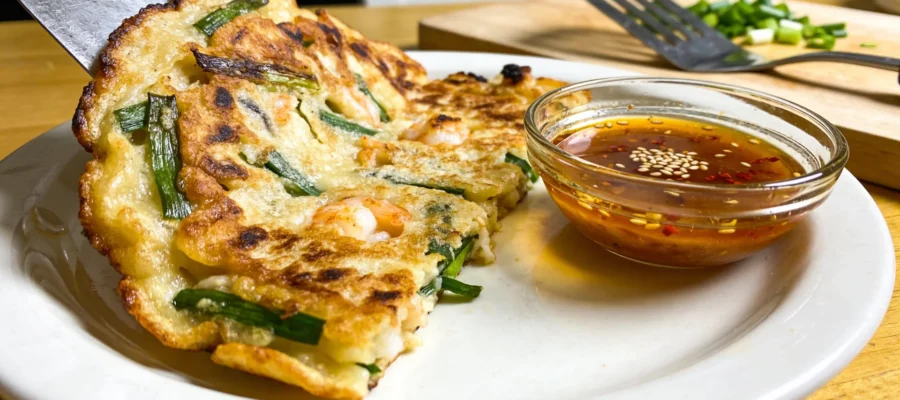
Korean pancakes recipe enthusiasts, I’m about to change your life. After years of soggy, floppy pajeon disappointments, I finally cracked the code to getting that perfect crispy-chewy texture that makes you feel like you’re sitting in a tiny street food stall in Seoul. The secret? It’s not what you put in – it’s how hot your pan is and one ingredient nobody talks about. But we’ll get to that.
Table of Contents :
My Pajeon Revelation
The first time I attempted Korean pancakes at home, I was… well, let’s just say underwhelmed. They looked nothing like the crispy-edged, vegetable-packed beauties I’d fallen in love with at my local Korean restaurant. Mine were gummy in the middle, pale around the edges, and stuck to the pan like they’d signed a lease.
I went through about seven batches before I realized what most recipes weren’t telling me. Most online versions are maddeningly vague about three critical factors: pan temperature, batter consistency, and that magical ingredient – a touch of cornstarch – that creates that signature crisp exterior. My friend Mina (whose grandmother makes the best pajeon in New Jersey) finally took pity and walked me through her family recipe, complete with the authentic dipping sauce that makes all the difference.
This recipe isn’t the ultra-traditional version with just scallions (that would be pajeon in its purest form). Instead, I’m sharing what many Korean home cooks actually make – a vegetable-packed version that still maintains those crispy edges and savory flavor, but gives you more bang for your buck. Think of it as everyday pajeon rather than special occasion pajeon.
Ingredients for Korean Pancakes
The beauty of Korean pancakes is their simplicity. You don’t need specialty ingredients for the basic version – though I’ll note where traditional Korean pantry items take the flavor to the next level. The most important aspect isn’t fancy ingredients but rather the ratio of liquid to flour and getting your pan hot enough.
For substitutions, I’ve tested nearly everything possible because I’ve made these when my pantry was practically bare. I’ll note what’s flexible and what’s absolutely essential for that authentic taste and texture.
All-purpose flour (1 cup)
Regular all-purpose flour works perfectly fine here. I’ve tried making these with gluten-free flour blends, and they work decently but don’t get quite the same chew. The protein content in regular flour gives these pancakes their structure while still allowing for tenderness.
Cornstarch (2 tablespoons)
This is the secret weapon nobody tells you about. Adding just a couple tablespoons of cornstarch to the batter creates that signature crispiness around the edges while keeping the inside tender. I’ve forgotten it before and immediately noticed the difference – much less crispy and more doughy. Don’t skip this.
Cold water (1 cup)
The water needs to be COLD – I’m talking straight from the refrigerator cold. This helps create a light batter that doesn’t immediately turn gummy. Some recipes use ice water; I’ve found refrigerated water works just as well without diluting the batter as the ice melts.
Eggs (1 large)
The egg adds richness and helps bind everything together. I’ve made these without eggs for vegan friends, and while they work, they’re more delicate and break apart more easily. If you need to omit the egg, add 1 tablespoon of cornstarch to compensate.
Scallions/green onions (1 bunch, about 6-8)
These are the star of pajeon. Cut them into 2-3 inch lengths. Don’t chop them small – the long strips of green onion are what make these pancakes so distinctive. In Korean markets, you’ll sometimes see extra-long scallions specifically sold for pajeon. Regular grocery store scallions work perfectly fine.
Vegetables (1/2 cup carrots, 1/2 cup red bell pepper)
I julienne carrots and red bell pepper for color and crunch. These aren’t strictly traditional, but they add nutrition and visual appeal. Feel free to substitute with whatever you have – zucchini works great too. Just make sure to cut everything into thin strips so they cook quickly.
Seafood (optional: 1/4 lb small shrimp or squid)
Traditional haemul pajeon includes seafood. Small shrimp or thinly sliced squid work wonderfully, but this is completely optional. I make the vegetable version 90% of the time because it’s easier, but seafood does add a beautiful umami richness if you have it on hand.
Soy sauce (1 tablespoon)
This goes directly into the batter for flavor depth. I prefer low-sodium so I can control the saltiness. If you’re gluten-free, tamari works perfectly as a substitute. The soy adds that savory umami quality that makes these pancakes so irresistible.
Sesame oil (1 teaspoon)
Just a touch adds that unmistakable nutty aroma. I’ve learned the hard way that more is not better – too much makes the pancakes oily and overwhelming. One teaspoon is the sweet spot. Don’t substitute with other oils; the sesame flavor is key.
Vegetable oil for frying (about 3-4 tablespoons)
Don’t be stingy here. These pancakes need enough oil to create that crispy exterior. I use a neutral oil like grapeseed or canola. Olive oil has too low a smoke point and will burn before your pancakes get properly crispy.
For the Dipping Sauce:
Soy sauce (3 tablespoons)
The base of our dipping sauce. Again, I prefer low-sodium for better control of the final flavor. The sauce should be punchy but not overwhelmingly salty since you’ll be dipping each bite.
Rice vinegar (1 tablespoon)
This provides essential acidity to balance the savory pancakes. In a pinch, I’ve used apple cider vinegar, but rice vinegar has the right level of mild acidity without overwhelming. White vinegar is too harsh, so avoid that substitution.
Sesame oil (1/2 teaspoon)
Just like in the batter, a little goes a long way. This rounds out the sauce with nutty warmth. I once accidentally added a tablespoon instead of a teaspoon and ruined the entire sauce – it became unpleasantly oily.
Gochugaru/Korean red pepper flakes (1/2 teaspoon, optional)
These add a gentle heat that builds with each bite. They’re different from regular red pepper flakes – less hot, more fruity. If you can’t find them, you can substitute with a pinch of regular red pepper flakes or just omit for a milder sauce.
Instructions for Korean Pancakes
Making pajeon is quick once you get the hang of it – maybe 20 minutes from start to finish. The actual cooking goes fast (about 3-4 minutes per pancake), so have everything prepped and ready before you start. The most common mistake people make is either having the pan too cool (resulting in soggy pancakes) or overcrowding the vegetables (which releases too much moisture).
I recommend making the dipping sauce first, so the flavors have time to meld while you’re preparing the pancakes. And trust me when I say you’ll want to use a non-stick pan here – I’ve tried cast iron and stainless steel, and while they work, you’ll use way more oil and still risk sticking.
STEP 1: Make the dipping sauce.
In a small bowl, combine the soy sauce, rice vinegar, sesame oil, and gochugaru if using. Add a sprinkle of sliced scallion greens if you’re feeling fancy. Whisk with a fork until fully combined, then set aside. This sauce actually improves as it sits, so making it first allows the flavors to meld while you prepare the pancakes.
STEP 2: Prepare the vegetables.
Cut the scallions into 2-3 inch lengths. Julienne the carrots and bell peppers into thin matchsticks. If using seafood, make sure it’s patted dry with paper towels – excess moisture is the enemy of crispiness. Keep all the prepped ingredients separate for now; we’ll add them to the pancakes individually, not mix them into the batter.
STEP 3: Mix the batter.
In a large bowl, whisk together the flour, cornstarch, and a pinch of salt. In a separate bowl, beat the egg with cold water, soy sauce, and sesame oil. Pour the wet ingredients into the dry ingredients and whisk until just combined. The batter should be relatively thin – think heavy cream consistency, not pancake batter thickness. Some small lumps are fine; overmixing will develop gluten and make the pancakes tough.
STEP 4: Heat the pan properly.
This step is CRUCIAL. Heat a 10-12 inch non-stick pan over medium-high heat until it’s properly hot – about 2-3 minutes. Add 1-2 tablespoons of oil and swirl to coat the bottom. The oil should shimmer but not smoke. Drop a tiny bit of batter in; if it sizzles immediately, you’re ready. If it just sits there, your pan isn’t hot enough yet.
STEP 5: Pour and arrange.
Ladle about 1/2 cup of batter into the hot pan and quickly tilt to spread it into a circle about 6-7 inches wide. Immediately arrange a portion of the scallions in a single layer on top, going in one direction. Add some carrot and pepper strips between the scallions, and seafood if using. Don’t overcrowd – this is where most people go wrong! Too many vegetables release too much moisture and prevent crisping.
STEP 6: Cook until golden brown.
Let the pancake cook undisturbed for about 2-3 minutes until the edges look set and golden brown. You’ll hear a satisfying sizzle the entire time – if the sizzling stops, your pan temperature has dropped too low. Resist the urge to peek or move the pancake too early! I learned this the hard way when I kept fussing with it and ended up with a broken mess.
STEP 7: Flip with confidence.
Once the bottom is golden brown and crisp, carefully flip the pancake using a large spatula – do this in one confident motion. If you hesitate, it might break. Add another tablespoon of oil around the edges of the pan, which will seep under the pancake and help crisp the other side. Cook for another 2 minutes until the second side is golden brown and the vegetables are tender-crisp.
STEP 8: Drain and slice.
Transfer the finished pancake to a paper towel-lined plate to drain excess oil for just a moment. Then move to a cutting board and slice into quarters or sixths with a sharp knife or kitchen scissors. Serve immediately with the dipping sauce while still hot and crispy. The temperature contrast between the hot pancake and cool dipping sauce is part of the experience.
Tips & Variations for Korean Pancakes
If your pancakes aren’t getting crispy enough, your pan probably isn’t hot enough. The batter should sizzle loudly when it hits the oil. Also, make sure you’re using enough oil – these aren’t meant to be low-fat.
For make-ahead options, you can mix the dry ingredients and prepare the vegetables earlier in the day, but I don’t recommend mixing the batter until you’re ready to cook. These pancakes are at their absolute best fresh from the pan – they’ll lose crispiness as they sit. If you must reheat leftovers, a toaster oven works better than a microwave.
For a gluten-free version, substitute the all-purpose flour with a 1:1 gluten-free flour blend and use tamari instead of soy sauce. The texture will be slightly different but still delicious.
During zucchini season, I often make these with grated zucchini – just be sure to squeeze out excess moisture first. Kimchi pajeon is another fantastic variation – chop about 1/2 cup of kimchi and add it to the pancake for a spicy, fermented twist.
Final Thoughts on Korean Pancakes
Korean pancakes aren’t going to win any beauty contests – they’re rustic, sometimes a little uneven around the edges, and that’s exactly how they should be. Mine never look as perfect as the ones in restaurant photos, and honestly, that’s how I know they’re authentic. The magic is in that perfect textural contrast: crispy edges giving way to a tender interior, the slight chew of the scallions, and that savory-tangy sauce that brings it all together.
If you try this recipe, drop me a comment about how it turned out. I’m especially curious if the cornstarch trick worked its magic for you too. And don’t forget to share your favorite pajeon fillings – I’m always looking for new combinations to try on a rainy day, which according to Korean tradition, is the perfect weather for pancakes. Something about the sound of rain and the sizzle of batter…
Korean Pancakes Recipe (Crispy Pajeon with Authentic Dipping Sauce)
This recipe for Korean pancakes (Pajeon) features a crispy exterior and a tender interior, packed with vegetables and served with a savory dipping sauce.