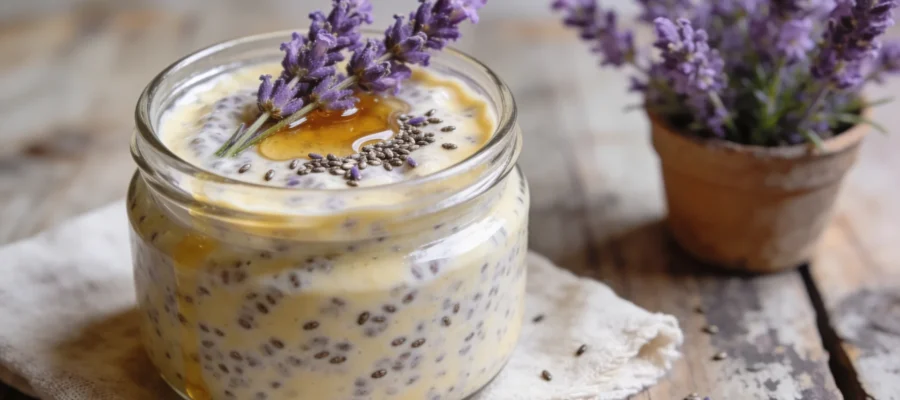
This lavender chia pudding recipe completely changed how I feel about breakfast meal prep. I used to think chia pudding was just another boring health food trend until I started experimenting with floral flavors. Now? I make a batch almost every weekend. There’s something magical about the delicate lavender scent that transforms those ordinary little seeds into something that feels downright luxurious—without being overpowering or soapy (because we’ve all had that “eating perfume” experience with poorly made lavender desserts, right?)
Table of Contents :
How I Discovered My Love for Lavender Chia Pudding
So here’s the thing—I’ve always been skeptical of food trends, especially ones that claim to be both healthy AND delicious. My first attempt at chia pudding years ago was a disappointing, gelatinous mess that tasted like… well, nothing. Just sad, bland little seeds swimming in almond milk. I gave up on the whole concept for years.
Then during a particularly stressful month last spring, I was looking for calming, sleep-promoting foods and kept seeing lavender mentioned. I had this culinary lavender sitting in my pantry from a failed shortbread cookie experiment (don’t ask—complete disaster), and thought, “What if I infuse some milk with this and make chia pudding?”
The first attempt was WAY too strong—I felt like I was eating a bar of soap. But after some tweaking, I found that perfect balance where the lavender is present but gentle. I made it for my mom who usually hates “weird health foods,” and she called the next day asking for the recipe. That’s when I knew I was onto something special.
Ingredients for lavender chia pudding recipe
The beauty of this recipe lies in its simplicity. You only need a handful of ingredients, but each one plays an important role in creating that perfect balance of flavor and texture. The lavender is obviously the star, but don’t overlook the importance of good quality milk and the right sweetener.
Quality matters here, especially with the lavender. This isn’t the place to use that dusty jar that’s been sitting in your spice cabinet for three years. And if you’re worried about the pudding tasting like potpourri (valid concern!), I promise the amounts I’ve worked out create a delicate flavor that’s floral without veering into soap territory.
Culinary Lavender (1 tablespoon)
This is NOT the same as the lavender you put in your bath or garden! Look specifically for culinary-grade lavender, which is less intense and processed for food use. I get mine from a local spice shop, but you can find it online easily. If yours is particularly potent, start with 2 teaspoons instead of the full tablespoon.
Chia Seeds (1/4 cup)
These magical little seeds create the pudding-like consistency by absorbing liquid and creating a gel. Either black or white chia seeds work perfectly fine—there’s no flavor difference. I’ve found the freshness matters though; old chia seeds don’t plump up as well and can taste slightly bitter. Store them in the freezer to keep them fresh longer.
Plant-Based Milk (1 1/2 cups)
I prefer oat milk for its creamy texture, but almond, coconut, or soy work beautifully too. Regular dairy milk is also fine! If using coconut milk, I recommend the carton kind rather than canned—unless you want a super rich, dessert-like result. Whatever you choose, make sure it’s unsweetened so you can control the sweetness level yourself.
Honey or Maple Syrup (2-3 tablespoons)
The natural sweetness complements the floral notes perfectly. I usually use honey because I love how it pairs with lavender, but maple syrup works wonderfully for a vegan option. Start with 2 tablespoons and adjust to taste—some mornings I want it sweeter than others. Agave also works, but I find its flavor less interesting with the lavender.
Vanilla Extract (1/2 teaspoon)
This is the unsung hero that rounds out the flavor profile. It bridges the gap between the floral lavender and the earthy chia seeds. Use real vanilla extract if possible—the artificial stuff creates an odd aftertaste against the lavender. In a pinch, a scraped vanilla bean pod works even better, but that’s getting fancy.
Pinch of Salt (about 1/8 teaspoon)
Don’t skip this! Salt doesn’t make the pudding taste salty—it enhances all the other flavors and prevents the pudding from tasting flat. I use fine sea salt, but regular table salt works just as well. Just a tiny pinch makes all the difference between “meh” and “wow.”
Optional Toppings
Fresh berries, a drizzle of honey, sliced almonds, or a sprinkle of bee pollen all complement the lavender beautifully. My personal favorite is a handful of blueberries and a light dusting of crushed pistachios for color and crunch. Keep toppings simple—the lavender flavor is delicate and can easily be overwhelmed.
Instructions for lavender chia pudding recipe
This recipe is nearly foolproof, but there are a few crucial moments where attention makes the difference between “eh, it’s fine” and “wow, this is amazing!” The most important part is properly infusing the milk without over-extracting bitter compounds from the lavender, and getting the chia seed-to-liquid ratio just right.
The entire process takes about 10 minutes of active time, then several hours of waiting (preferably overnight). If you’re in a rush, 4 hours of chilling time is the absolute minimum—anything less and you’ll end up with soupy chia seeds rather than that perfect pudding consistency. Trust me, I’ve tried rushing it. Multiple times. It never works.
STEP 1: Infuse the milk with lavender.
Combine your milk of choice with the culinary lavender in a small saucepan. Warm it over medium-low heat until it just starts to steam—NOT boil. If it boils, the milk might curdle and the lavender can release bitter flavors. Turn off the heat as soon as you see wisps of steam (around 180°F if you have a thermometer). Cover and let steep for exactly 10 minutes. Any longer and it starts tasting medicinal.
STEP 2: Strain out the lavender.
Place a fine-mesh strainer over a bowl and pour the infused milk through it. Press gently on the lavender with the back of a spoon to extract all that flavor-infused milk. Don’t skip the straining—biting into actual lavender buds is not pleasant. I once thought “why not leave them in for more flavor?” and regretted it immediately. The texture was all wrong and the flavor became overwhelming.
STEP 3: Add sweetener and vanilla.
While the milk is still warm (but not hot), stir in your honey or maple syrup and the vanilla extract. The warmth helps them dissolve and incorporate fully. Add your pinch of salt now too. Take a tiny taste and adjust sweetness if needed—remembering that the flavors will mellow and meld as it chills.
STEP 4: Combine with chia seeds.
Pour your flavored milk into a bowl with the chia seeds. Whisk immediately and thoroughly—this is CRUCIAL. If you don’t whisk well enough, the chia seeds clump together in gelatinous blobs rather than distributing evenly. I’ve had to rescue many batches by blending them because I got lazy with my initial whisking. Keep whisking for about 30 seconds until all seeds are separated.
STEP 5: The crucial second whisk.
Here’s the trick that changed my chia pudding game: Let the mixture sit for 10 minutes, then whisk again. This prevents clumping as the seeds begin to gel. I can’t tell you how many times I’ve skipped this step and regretted it when I found a giant chia seed iceberg floating in my jar the next morning. The second whisk is non-negotiable if you want perfect texture.
STEP 6: Refrigerate overnight.
Transfer the mixture to a storage container or individual jars and refrigerate for at least 4 hours, but preferably overnight. The pudding will thicken as it sits, and the flavors will develop and mellow. If the pudding seems too thick in the morning, just stir in a splash more milk. If it’s too thin (which sometimes happens with certain plant milks), you can add a few more chia seeds, stir, and wait another hour.
STEP 7: Serve with your favorite toppings.
Give your pudding a good stir before serving, as it can settle a bit. Then top with fresh berries, a drizzle of additional honey, or whatever toppings you love. The pudding will keep in the refrigerator for up to 3 days, though the texture is best within the first 48 hours. After that, it can get a bit too soft and lose that perfect pudding consistency.
Tips & Variations for lavender chia pudding recipe
If your pudding turns out too watery, add another tablespoon of chia seeds, stir well, and refrigerate for another hour. Conversely, if it’s too thick, add a splash of milk and stir until you reach your desired consistency. For a smoother pudding, blend everything after step 3—I sometimes do this for guests who are texture-sensitive. If lavender isn’t your thing, try this same method with chamomile tea bags, rose petals, or cardamom pods.
For meal prep, I make a large batch and portion it into small mason jars—it keeps beautifully for 3 days. And don’t worry if your pudding doesn’t look Instagram-perfect like those carefully styled food blog photos. Mine certainly doesn’t, especially by day 3, but the flavor is what matters, and it’s consistently delicious even when it’s not photogenic.
Final Thoughts on lavender chia pudding recipe
Look, I’m not saying this lavender chia pudding recipe will change your life, but it might just change your morning routine. It’s one of those rare recipes that feels special and luxurious while actually being good for you. And there’s something incredibly satisfying about opening the fridge first thing in the morning to find breakfast already made—especially one that feels this fancy.
If you try this recipe, please let me know how it turns out! I’m always tweaking my recipes and would love to hear your variations. Did you try a different milk? Add some lemon zest? Turn it into a parfait? I’m genuinely curious about how this recipe works in different kitchens with different ingredients. Your feedback helps make these recipes better for everyone!
Lavender Chia Pudding
This lavender chia pudding recipe is floral, light, and naturally sweetened, perfectly balancing flavors and textures.