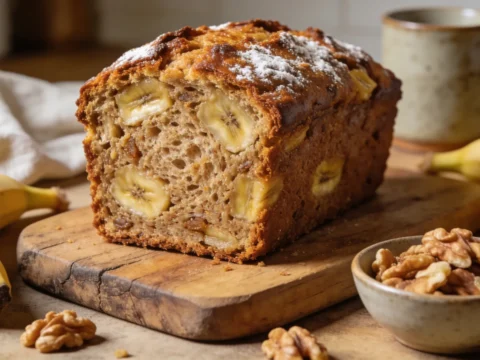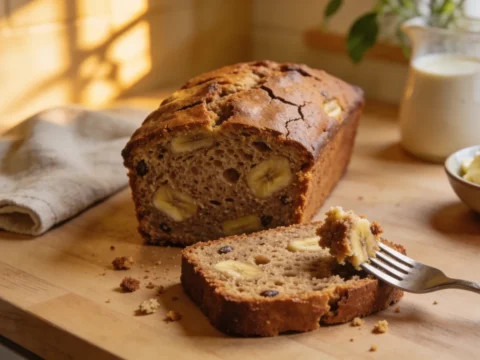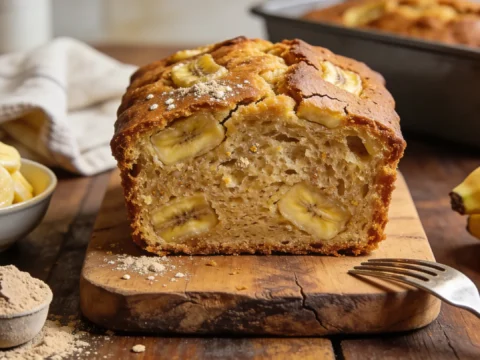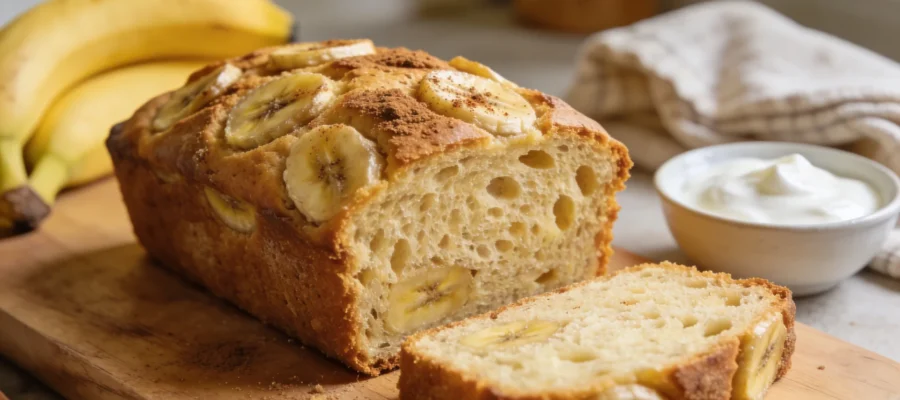
This low fat banana bread recipe has been my go-to for years, and I’m still amazed that something this moist and delicious can clock in at under 150 calories per slice. I used to think low-fat baking meant sacrificing flavor, but honestly? This version tastes better than most full-fat recipes I’ve tried. The secret is in how you handle those overripe bananas and which ingredients you swap out without anyone noticing.
Table of Contents :
Why I Started Making Low Fat Banana Bread
Look, I’m gonna be honest — I didn’t set out to make healthy banana bread. I was just tired of feeling guilty every time I reached for a second slice of the regular stuff. My original recipe was loaded with butter and oil, and while it tasted incredible, I couldn’t justify eating it as often as I wanted to.
The first time I tried making a lighter version was a complete disaster. I just cut the fat in half and called it a day. The result? Dense, rubbery bread that tasted like sadness. My husband took one bite and asked if I was feeling okay. I learned the hard way that you can’t just reduce ingredients without understanding what they actually do in the recipe.
After about six failed attempts and way too many overripe bananas, I finally cracked the code. The trick isn’t just removing fat — it’s replacing it with ingredients that add moisture and structure in different ways. Now I actually prefer this version to the original, and nobody who’s tried it believes it’s low-fat until I tell them.
Ingredients Low Fat Banana Bread Recipe
The beauty of this recipe is that most of these ingredients are probably sitting in your pantry right now. I’ve tested every possible substitution over the years, so I’ll tell you exactly what you can swap and what you absolutely shouldn’t mess with. The key is understanding that each ingredient has a job to do — some add sweetness, others provide structure, and a few are doing double duty.
One thing I’ve learned is that quality matters more when you’re working with fewer ingredients. Since we’re not masking everything with butter, the banana flavor really shines through, so make sure yours are properly overripe. We’re talking brown spots, soft to the touch, and definitely past the point where you’d eat them straight.
3 large overripe bananas (about 1½ cups mashed)
These are the star of the show and your main source of moisture. I wait until they’re covered in brown spots and feel squishy when I gently squeeze them. Don’t use bananas that are just yellow — they won’t mash properly and the bread will taste starchy. If you’re in a hurry, you can speed up ripening by baking whole bananas at 300°F for 15-20 minutes until the skins turn black.
¾ cup unsweetened applesauce
This replaces most of the oil and adds incredible moisture without any fat. I always use unsweetened because we’re getting plenty of sweetness from the bananas and added sugar. Mott’s works great, but any brand is fine. You can substitute with mashed sweet potato or pumpkin puree, but the flavor will change slightly.
2 large eggs (or ¾ cup egg substitute)
Eggs provide structure and richness that we lose by cutting the fat. I use whole eggs because the small amount of fat in the yolks actually helps with texture. If you’re watching cholesterol, egg substitute works perfectly fine — I’ve tested it multiple times and can barely tell the difference.
⅓ cup brown sugar
I prefer brown sugar over white because it adds a slight molasses flavor that complements the bananas beautifully. You can reduce this to ¼ cup if your bananas are extremely sweet, or substitute with coconut sugar or even honey (reduce to ¼ cup if using honey and add an extra tablespoon of flour).
1¾ cups all-purpose flour
Regular all-purpose flour works perfectly here. I’ve tried whole wheat flour, but it makes the bread too dense for my taste. If you want to sneak in some whole grains, you can substitute up to ½ cup of the all-purpose flour with white whole wheat flour — any more than that and the texture suffers.
1 teaspoon baking soda
This is crucial for proper rise and you absolutely cannot skip it. Baking soda reacts with the natural acids in the bananas to create lift. Make sure yours is fresh — if it’s been sitting in your pantry for over a year, buy new. Test it by adding a pinch to some vinegar; it should fizz immediately.
½ teaspoon salt
Don’t skip the salt! It enhances all the other flavors and is especially important in low-fat baking where we need every bit of flavor we can get. I use regular table salt, but sea salt or kosher salt work fine too.
1 teaspoon vanilla extract
Pure vanilla extract makes a noticeable difference in the final flavor. The artificial stuff will work in a pinch, but since we’re not masking flavors with lots of butter and sugar, the quality of your vanilla really comes through. I always keep the good stuff around for baking.
⅓ cup low-fat buttermilk
This is my secret weapon for moisture and tang. The acid in buttermilk also helps activate the baking soda for better rise. If you don’t have buttermilk, make your own by adding 1 teaspoon of lemon juice or white vinegar to ⅓ cup of regular milk and letting it sit for 5 minutes until it curdles slightly.
Instructions Low Fat Banana Bread Recipe
This bread comes together quickly and doesn’t require any special techniques or equipment. The whole process takes about 10 minutes of active time, plus an hour in the oven. The key is not to overmix once you add the flour — that’s the fastest way to end up with tough, rubbery bread that nobody wants to eat.
I like to have everything at room temperature before I start, but don’t stress if your eggs are cold. The batter is pretty forgiving. Just don’t use bananas straight from the fridge because they won’t mash as smoothly. Room temperature ingredients blend together more easily and create a more uniform texture.
STEP 1: Preheat your oven and prep your pan.
Set your oven to 350°F and spray a 9×5 inch loaf pan with cooking spray, or line it with parchment paper. I prefer parchment because it guarantees easy removal, but cooking spray works fine too. Don’t skip this step — low-fat breads can be more prone to sticking because there’s less fat to create natural release.
STEP 2: Mash your bananas completely.
In a large bowl, mash the bananas until they’re mostly smooth with just a few small lumps. I use a potato masher, but a large fork works too. Don’t worry about getting them perfectly smooth — those little chunks actually add nice texture to the finished bread. The bananas should smell sweet and fragrant when properly ripe.
STEP 3: Mix the wet ingredients.
Add the applesauce, eggs, brown sugar, vanilla, and buttermilk to the mashed bananas. Whisk everything together until well combined, about 1-2 minutes. The mixture should be smooth and smell amazing — like banana muffin batter. Don’t worry if it looks a bit thin; that’s normal with low-fat batters.
STEP 4: Combine the dry ingredients separately.
In a separate bowl, whisk together the flour, baking soda, and salt. This ensures everything is evenly distributed before we add it to the wet ingredients. I learned this step the hard way after biting into a piece of bread with a pocket of pure baking soda — not pleasant.
STEP 5: Fold everything together gently.
Add the flour mixture to the banana mixture and fold together with a wooden spoon or rubber spatula until just barely combined. You should still see a few streaks of flour — that’s perfect. Overmixing develops the gluten and creates tough bread. This took me several tries to learn because I kept wanting to mix until it looked “perfect.”
STEP 6: Pour and bake.
Pour the batter into your prepared loaf pan and smooth the top gently with a spatula. Bake for 55-60 minutes, until a toothpick inserted in the center comes out with just a few moist crumbs clinging to it. The top should be golden brown and spring back lightly when touched. If the top starts browning too quickly, tent it with foil for the last 15 minutes.
STEP 7: Cool completely before slicing.
This is the hardest part, but let the bread cool in the pan for 10 minutes, then turn it out onto a wire rack to cool completely before slicing. Low-fat breads need this cooling time to set up properly. If you slice too early, it’ll be gummy in the center. Trust me, I’ve ruined many loaves by being impatient.
Tips & Variations Low Fat Banana Bread Recipe
This bread keeps beautifully for up to a week wrapped in plastic wrap at room temperature, or you can freeze individual slices for up to three months. If it starts to feel a bit dry after a few days, just toast it lightly — it brings back that fresh-baked texture perfectly. You can also add ½ cup of mini chocolate chips or chopped walnuts if you want to dress it up, but honestly, it’s delicious plain.
Final Thoughts Low Fat Banana Bread Recipe
Look, this isn’t going to fool anyone into thinking they’re eating cake, but it’s genuinely delicious banana bread that happens to be light. I’ve served this at potlucks without mentioning it’s low-fat, and people always ask for the recipe. The texture is perfectly moist, the banana flavor is rich and natural, and at under 150 calories per slice, you can actually have a second piece without guilt.
Let me know how yours turns out — I’m always curious if this works as well in other kitchens or if mine just has some kind of banana bread magic going on. And if you try any variations, definitely share them because I’m constantly looking for new ways to keep this recipe interesting.
Low Fat Banana Bread Recipe
This low fat banana bread recipe is moist, delicious, and clocks in at under 150 calories per slice, perfect for satisfying your banana bread cravings without the guilt.