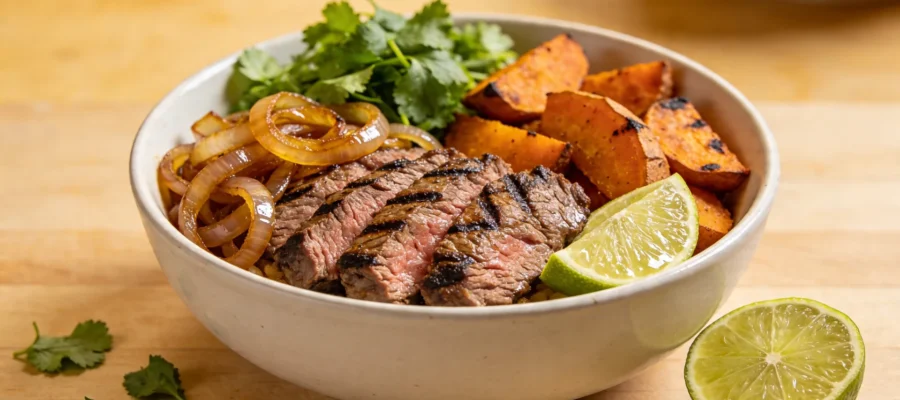
Cilantro lime steak bowls have basically saved my weeknight dinner situation more times than I can count. I started making these a few years ago when I was in that familiar 6pm panic mode—you know, staring into the fridge hoping something magical would materialize. What began as a random “throw whatever I have together” meal has evolved into one of our household favorites that actually gets requested now. The combination of that tender, slightly charred steak with the bright, zesty lime and fresh cilantro just works on a level that feels way too good for how simple it is.
Table of Contents :
How These Steak Bowls Became My Meal Prep Salvation
Let me tell you about the first time I attempted these bowls for meal prep. Complete disaster. I overcooked the steak to the point it could have doubled as shoe leather, and I used an entire bunch of cilantro thinking “more is better”—it was not. My lunch the next day tasted like I was eating a bar of soap with a side of beef jerky.
After that humbling experience, I got serious about figuring out the right balance. The key was actually in the marinade timing (I was leaving it way too long) and in cooking the steak properly—just a quick sear on each side and letting it rest before slicing. Now I prep these on Sunday evenings while catching up on whatever show I’m binging, and I’ve got lunch sorted for at least three days of the week. My coworker even accused me of ordering takeout when I brought these in—honestly, one of my proudest moments. These bowls have this perfect balance where they’re legitimately healthy but don’t make you feel like you’re suffering through a “health food” lunch, you know?
Ingredients for Cilantro Lime Steak Bowls
The beauty of these bowls is that while the core ingredients stay the same, you can really adapt based on what you have on hand. That said, there are a few non-negotiables that give these bowls their signature flavor. The steak marinade is crucial—that’s where all the magic happens—and you definitely need fresh cilantro and lime. Dried herbs just won’t cut it here, trust me on this one.
I tend to batch cook the components on Sunday, and then assemble fresh bowls throughout the week. The steak is actually perfect cold or room temp, which makes this ideal for those days when you can’t face the microwave line at work.
Flank or Skirt Steak (1-1.5 pounds)
Either cut works perfectly here—they’re both relatively thin and absorb marinade beautifully. Flank is a bit leaner, while skirt has more marbling and flavor but can be slightly tougher if overcooked. I usually go with whatever’s on sale, honestly. If you’re really on a budget, you could substitute with flat iron steak or even sirloin, though you’ll want to adjust cooking times accordingly.
Fresh Limes (3-4)
You’ll need both the zest and juice, so don’t bother with that bottled stuff. Look for limes that feel heavy for their size and have a slight give when pressed—those are juicier. I learned the hard way that rock-hard limes yield practically no juice, which left my first attempt at this marinade seriously lacking that bright acidity we need here.
Fresh Cilantro (1 bunch)
This is non-negotiable for me—the fresh, slightly peppery flavor is what makes these bowls special. And yes, I know about the cilantro-soap gene thing! If you’re one of those people who thinks cilantro tastes like Dawn dish soap, substitute with flat-leaf parsley. You’ll get a different flavor profile but still that fresh, herbaceous quality that makes the bowl pop.
Garlic (4 cloves)
Fresh is essential here. Those pre-minced jars are convenient but just don’t have the same punch. I smash mine with the side of my knife first—it makes the peeling easier and releases more of the oils. If you’re really in a time crunch, you could substitute 1 teaspoon garlic powder in the marinade, but I wouldn’t recommend it for the cilantro lime sauce.
Olive Oil (¼ cup)
This forms the base of our marinade and helps carry all those flavors into the meat. You don’t need your fancy finishing oil here—regular olive oil works perfectly. In a pinch, avocado oil makes a good substitute and has a nice high smoke point for when you’re searing the steak.
Rice (1 cup uncooked)
I typically use jasmine or basmati because I love how the grains stay separate and fluffy. Brown rice works great for a more nutritious option, though it takes longer to cook. Wild card option that I accidentally discovered: cilantro lime cauliflower rice makes this an amazing low-carb version when you’re feeling virtuous (or your pants are feeling tight).
Black Beans (1 15oz can)
They add protein, fiber, and that creamy texture that balances the chew of the steak. I drain and rinse mine thoroughly—it reduces the sodium by about 40% and prevents that weird can liquid from making everything soggy. If you’re a planner (I rarely am), cooking dried beans from scratch gives an even better texture, but let’s be real—the convenience of canned usually wins.
Avocado (1-2)
The creamy texture against the chewy steak and rice is *chef’s kiss*. Look for avocados that yield slightly to gentle pressure. Too soft means brown spots, too hard means waiting three days before you can use it. And if they’re on sale, I grab extra to freeze cubes for smoothies—little life hack there.
Greek Yogurt (½ cup)
This forms the base of our cilantro lime crema. I use full-fat because the richness works better here, but any percentage will do. Sour cream is a perfect substitute if that’s what you have. Once, in a pinch, I used cottage cheese blended smooth and it was surprisingly good—added extra protein too!
Instructions for Cilantro Lime Steak Bowls
Alright, let’s talk process. The beauty of these bowls is that while they look impressive, they’re actually pretty straightforward to make. The whole thing takes about 45 minutes from start to finish if you’re organized (or closer to an hour if you’re like me and constantly stopping to check your phone). The good news is that almost everything can be prepped ahead, which is why this is such a killer meal prep option.
When you’re searing the steak, resist—I repeat, RESIST—the urge to move it around in the pan. The first time I made this, I kept poking and prodding it, which prevented that gorgeous crust from forming. Let it do its thing. The other critical point is letting the meat rest before slicing—skip this step and all those beautiful juices will end up on your cutting board instead of in your mouth.
STEP 1: Marinate the steak.
In a bowl, combine the zest of 1 lime, juice of 2 limes (about ¼ cup), 3 minced garlic cloves, ¼ cup olive oil, 2 tablespoons chopped cilantro, 1 teaspoon salt, and ½ teaspoon black pepper. Whisk it all together until it looks somewhat emulsified. Place your steak in a zip-top bag or shallow dish, pour the marinade over it, and make sure it’s well-coated. Marinate for at least 30 minutes but no more than 2 hours—any longer and the lime juice starts “cooking” the meat, making it mushy. I found this out the hard way after marinating overnight once.
STEP 2: Cook the rice.
Rinse 1 cup rice under cold water until the water runs clear—this removes excess starch and prevents gummy rice. Combine with 1¾ cups water and a pinch of salt in a saucepan. Bring to a boil, then reduce to a simmer and cover. Cook white rice for about 15-18 minutes or brown rice for 35-40 minutes, until water is absorbed and rice is tender. Remove from heat and let it sit, covered, for 5 minutes—this step is non-negotiable for fluffy rice. Trust me, I’ve rushed this before and ended up with a gluey mess.
STEP 3: Make the cilantro lime crema.
While the rice cooks, blend ½ cup Greek yogurt, ¼ cup chopped cilantro, juice of 1 lime, 1 garlic clove, and a pinch each of salt and pepper until smooth. If it’s too thick, add a splash of water or a bit more lime juice. Taste and adjust seasoning—it should be tangy and herbaceous, not bland. I once forgot the salt and it was just flat and boring, so don’t skip that little pinch! Transfer to a container and refrigerate until ready to use.
STEP 4: Prepare the beans and vegetables.
Drain and rinse 1 can of black beans. Dice any vegetables you’re adding—I usually go with bell peppers, red onion, and sometimes corn kernels if I have some. The first time I made this, I didn’t drain the beans well enough and ended up with bean liquid soaking into everything—not appetizing. So give them a good rinse in a colander and let them drain completely while you move on to cooking the steak.
STEP 5: Cook the steak.
Remove the steak from the marinade and pat it dry with paper towels. This is crucial—wet steak steams instead of sears. Heat a cast iron skillet or heavy pan over high heat until it’s smoking hot. Add 1 tablespoon of high heat oil (I use avocado), then add the steak. For medium-rare, cook about 3-4 minutes per side for flank steak, or 2-3 minutes per side for skirt steak. The exact time depends on thickness—look for a nice crust to form before flipping. Use tongs, not a fork, to avoid piercing the meat and losing those precious juices.
STEP 6: Rest and slice the steak.
Transfer the cooked steak to a cutting board and let it rest for AT LEAST 5 minutes—ideally 10. I know it’s tempting to cut into it right away, but this rest time allows the juices to redistribute throughout the meat. If you cut too soon, all that flavor ends up on your cutting board instead of in your bowl. Once rested, slice the steak thinly AGAINST the grain. This is non-negotiable—cutting with the grain will give you chewy, tough meat, no matter how perfectly you cooked it.
STEP 7: Assemble the bowls.
Now for the fun part! Start with a base of rice, then add a portion of black beans to one section. Arrange your sliced steak in another section (about 3-4 ounces per bowl is my target). Add any additional vegetables you’re using. Slice half an avocado and fan it out on one side. Drizzle everything with the cilantro lime crema, and finish with an extra squeeze of lime juice, a sprinkle of fresh cilantro, and maybe some hot sauce if you’re feeling spicy. If meal prepping, I pack the avocado and crema separately to add fresh each day.
Tips & Variations for Cilantro Lime Steak Bowls
These bowls keep beautifully in the fridge for up to 3 days. The steak is actually even better on day 2 after it’s had time to soak up more flavor. I recommend slightly undercooking the steak if you’re meal prepping—aim for rare rather than medium-rare, as it will cook a bit more when you reheat it. If you’re eating it cold, this isn’t an issue.
For a lower-carb option, swap the rice for cauliflower rice or a bed of greens. To make it vegetarian, replace the steak with grilled portobello mushrooms marinated in the same mixture—they absorb the flavors beautifully. And if you’re avoiding dairy, substitute the Greek yogurt with coconut yogurt or a cashew-based cream for the cilantro lime sauce.
Oh, and if your bowls never look as pretty as the ones in food magazines, join the club. Mine always end up with the sauces running everywhere and everything mixed together by the second bite. They still taste amazing, and that’s what counts.
Final Thoughts on Cilantro Lime Steak Bowls
Look, I’m not saying these steak bowls will change your life, but they might just change your lunch game. There’s something ridiculously satisfying about opening a meal prep container with this inside instead of a sad sandwich. The combination of tender steak, zesty lime, and fresh cilantro hits all those flavor notes that make you feel like you’ve got your act together, even when the rest of your life is in complete chaos.
If you try making these, drop a comment and let me know what twist you put on yours. Seriously, I’m always looking for variations to keep things interesting through the work week. And if your steak turns out like shoe leather the first time—hey, we’ve all been there. Consider it a rite of passage on your way to meal prep mastery.
Cilantro Lime Steak Bowls
Cilantro lime steak bowls feature tender, charred steak paired with zesty lime, fresh cilantro, and a variety of customizable ingredients for a healthy meal prep option.