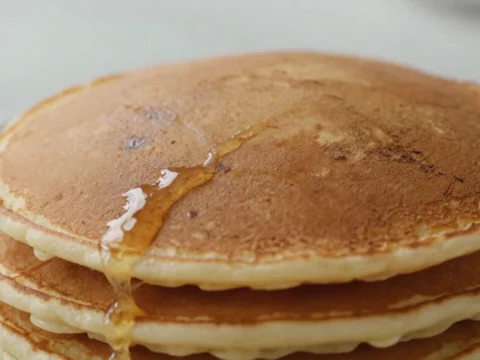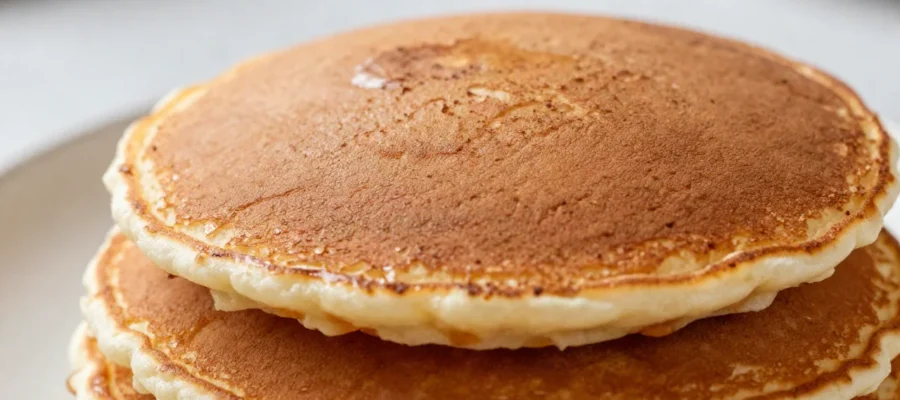
I have been making freezer pancakes on repeat for about four years now, ever since my oldest decided that mornings are a war zone and my toddler joined the resistance shortly after. This is one of those recipes that looks fussy (make pancakes, then freeze them, then reheat them, so many steps) but is actually the laziest possible way to guarantee a hot breakfast without touching a spatula before 7am. The trick isn’t some secret ingredient. It’s batch size and how you freeze them, and once you get that right you’ll wonder why you ever made pancakes one lonely batch at a time.
Prep: 15 minutes | Cook: 20 minutes | Total: 35 minutes plus freezing | Servings: makes about 24 pancakes (serves 6, with leftovers to freeze)
Why This Freezer Pancakes Recipe Actually Works
My first attempt at this was a disaster of my own making. I cooked a full batch, let the pancakes sit on a cooling rack for maybe five minutes, then stacked them directly into a gallon freezer bag while they were still warm. Two hours later I checked on them and the whole stack had fused into one solid pancake brick, welded together by steam and condensation. I had to microwave the entire brick just to peel off one pancake, and the rest turned rubbery and sad in the process.
The fix was embarrassingly simple: let them cool completely, flat, uncovered, before they touch each other or any plastic. Now I spread mine out on a baking sheet lined with parchment, freeze them flat for about an hour until they’re solid, and only then transfer them to a bag with parchment squares between layers if I’m stacking. No more pancake brick. This is non-negotiable if you want pancakes that pop apart individually instead of one frozen hockey puck of regret.
Ingredients for This freezer pancakes
This is a basic buttermilk pancake batter, built specifically to hold up well in the freezer and reheat without going gummy. Here’s everything you need and why.
All-Purpose Flour (2 cups)
Standard flour gives the best structure for freezing and reheating. Whole wheat flour works too but makes denser pancakes that some toddlers (mine, specifically) will reject on sight.
Baking Powder (2 tablespoons)
Yes, two full tablespoons, not teaspoons. This is what keeps the pancakes fluffy even after freezing and microwaving, which flattens texture more than you’d think.
Baking Soda (1/2 teaspoon)
Works with the buttermilk’s acidity for extra lift and a slightly golden color. Don’t skip it just because you already added baking powder, they do different jobs.
Salt (1/2 teaspoon)
Balances the sweetness and makes the pancake flavor taste like something instead of just soft and beige.
Sugar (2 tablespoons)
Just enough for a hint of sweetness and better browning. My husband likes to add more, I always talk him out of it because syrup is doing the heavy lifting anyway.
Buttermilk (2 cups)
The tang and acidity make these pancakes tender and give them a better rise. If you don’t have buttermilk, use regular milk with a tablespoon of lemon juice or white vinegar stirred in and let it sit for five minutes. Don’t substitute plain milk with nothing added, the texture turns noticeably flatter and denser.
Eggs (2 large)
Bind everything together and add richness. Bring them to room temperature first if you can, cold eggs straight from the fridge make the batter seize up a little and mix unevenly.
Unsalted Butter (4 tablespoons, melted and cooled)
Adds flavor and keeps the pancakes moist even after freezing. Cooled melted butter, not hot, or you’ll accidentally scramble the eggs when you mix everything together.
Vanilla Extract (1 teaspoon)
Optional but I always add it. Rounds out the flavor so the pancakes taste homemade instead of like plain flour and milk.
Butter or Oil for the Pan
For greasing the skillet between batches. I use a small pat of butter and wipe it around with a paper towel so it doesn’t pool and burn.
How to Make This freezer pancakes
The whole process takes about 35 minutes of active time, most of which is cooking pancakes in batches while you referee snack requests from a toddler who definitely already ate breakfast. Don’t rush the resting step for the batter, it actually matters.
STEP 1: Mix the dry ingredients
Whisk the flour, baking powder, baking soda, salt, and sugar together in a large bowl. You want everything evenly distributed so you don’t get a weird bitter baking soda pocket in one bite (been there, tasted that).
STEP 2: Combine the wet ingredients
In a separate bowl, whisk the buttermilk, eggs, melted butter, and vanilla until smooth. The mixture should look pale yellow and slightly foamy on top.
STEP 3: Combine, but don’t overmix
Pour the wet ingredients into the dry and stir with a spatula just until combined. It’s supposed to look a little lumpy, like cottage cheese texture almost. Overmixing here is the number one reason pancakes turn tough and chewy instead of fluffy, so stop stirring the second you don’t see dry flour streaks anymore.
STEP 4: Let the batter rest
Let it sit for 5 to 10 minutes while your skillet heats up. This lets the baking powder and soda start working and the gluten relax, which gives you a noticeably fluffier pancake.
STEP 5: Cook the pancakes
Heat a nonstick skillet or griddle over medium heat and grease it lightly. Pour about 1/4 cup of batter per pancake. Cook until bubbles form across the surface and the edges look matte instead of glossy, about 2 to 3 minutes, then flip. Cook the other side another 1 to 2 minutes until golden brown. If your first pancake comes out pale and gummy in the middle, your heat is too low, bump it up slightly for the next batch.
STEP 6: Cool completely before freezing
Spread the cooked pancakes in a single layer on a wire rack or baking sheet and let them cool all the way to room temperature, uncovered. This is the step I skipped the first time and paid for later. Give it a full 20 to 30 minutes, don’t rush it just because you’re hungry now.
STEP 7: Freeze flat, then bag them up
Arrange the cooled pancakes in a single layer on a parchment-lined baking sheet, not touching, and freeze for about an hour until solid. Then transfer them into a freezer bag or airtight container. They won’t stick together now, so you can grab exactly two pancakes at a time without wrestling the whole bag.
What to Serve With This freezer pancakes
Straight-up butter and maple syrup is the default in my house, no arguments allowed at the table. If I’m feeling ambitious I’ll fry up some eggs or turkey sausage links on the side (cook sausage to an internal temperature of 165°F if you’re using poultry-based links), and fresh berries are the easiest way to sneak a little fruit onto my picky kid’s plate since they’re not green and therefore not automatically rejected. A glass of orange juice rounds it out on weekends when we’re not sprinting out the door.
Tips for the Best freezer pancakes
These keep well in the freezer for about two months, though honestly mine never last that long because my husband snacks on them cold straight out of the bag, which I pretend to be horrified by but secretly think is efficient. In the fridge, cooked pancakes are fine for about 3 to 4 days if you want to skip freezing entirely and just meal-prep for the week.
Texture-wise, they’re at their absolute best in the first three to four weeks frozen. After that they still taste fine but the edges get a touch drier, so I lean toward finishing older batches first (write the date on the bag, you think you’ll remember, you won’t).
For reheating, the microwave is fastest, about 30 to 45 seconds for one pancake on a paper towel, but the toaster gives you crispier edges if you have the extra two minutes. For a dairy-free version, swap the buttermilk for a plant milk with a tablespoon of vinegar added, and use melted coconut oil instead of butter. The texture is slightly less rich but still holds up fine in the freezer.
Questions People Ask About freezer pancakes
Can I freeze pancake batter instead of cooked pancakes?
Technically yes, but I don’t recommend it. The baking powder loses a lot of its lifting power once thawed, so you end up with flatter, denser pancakes. Cooking first and freezing after gives a much better result.
Why did my frozen pancakes come out soggy in the microwave?
Usually this means they weren’t fully cooled before freezing, so extra moisture got trapped and turns to condensation when reheated. Make sure they’re room temperature and fully solid-frozen before bagging them together.
Can I make these ahead for a big brunch instead of freezing?
Sure, but keep any dairy-based batter or leftover pancakes off the counter for more than 2 hours at room temperature. Refrigerate promptly if you’re not serving them right away.
Do I need a griddle, or is a regular skillet fine?
A regular nonstick skillet works completely fine. A griddle just lets you cook more pancakes at once, which matters more when you’re feeding a crowd than when it’s just breakfast for your own chaos crew.
Final Thoughts on This freezer pancakes
My picky kid still picks the blueberries out if I ever add them to the batter, so we’ve settled on a permanent no-fruit-inside policy and I add berries on the side instead, which somehow satisfies everyone. These freezer pancakes have genuinely saved more mornings than I can count, and there’s something deeply satisfying about pulling breakfast out of the freezer while everyone else is still finding matching socks. Give this a try, and let me know in the comments how it goes for your family, especially if you’ve got your own picky eater rules I need to learn about.
Freezer Pancakes – Easy Homemade Pancakes for Busy Mornings
These freezer pancakes are the laziest possible way to guarantee a hot breakfast without touching a spatula before 7am. It is a basic buttermilk pancake batter, built specifically to hold up well in the freezer and reheat without going gummy.