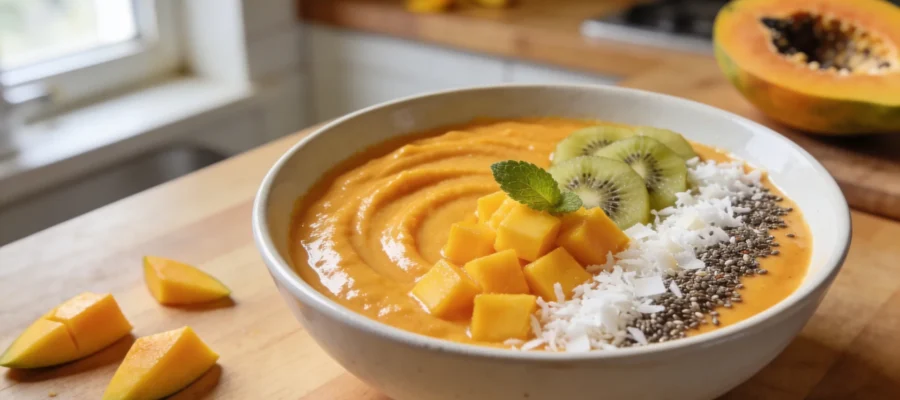
So I’ve been perfecting this mango smoothie bowl recipe for months now, and I’m honestly kind of obsessed. What started as a desperate attempt to use up overripe mangoes has turned into my go-to breakfast when I want something that tastes like vacation but doesn’t require actual cooking skills. The texture is thick enough to eat with a spoon, and the toppings make it feel fancy even though it takes maybe five minutes to throw together.
Table of Contents :
Why I’m Completely Hooked on Smoothie Bowls
Look, I’m gonna be honest — I used to think smoothie bowls were just Instagram nonsense. Like, why eat a smoothie with a spoon when you could drink it? Then my sister made me one last summer, and I got it. The thickness is completely different from a regular smoothie. It’s more like eating mango ice cream for breakfast, except it’s actually healthy and won’t make you crash at 10 AM.
My first attempt was a disaster though. I added way too much liquid and ended up with regular smoothie that I had to drink from the bowl like some kind of weirdo. Then I overcorrected and made it so thick I practically needed a chisel. I’ve finally found the sweet spot where it’s thick enough to hold toppings but still creamy enough to actually enjoy eating.
The best part is that this actually keeps me full until lunch, which never happens with regular smoothies. Something about eating it slowly with a spoon instead of chugging it makes all the difference.
Ingredients mango smoothie bowl recipe
Here’s the thing about smoothie bowl ingredients — fresh matters, but frozen is actually better for the base. I know that sounds backwards, but frozen mango gives you that thick, almost ice cream texture without having to add a bunch of ice that waters everything down. I always keep a bag of frozen mango chunks in my freezer specifically for this.
The banana is non-negotiable for creaminess, but everything else you can play around with. I’ve made versions with different milk alternatives, skipped the protein powder when I’m out, and switched up toppings based on whatever’s in my pantry. The key is getting that base consistency right — everything else is just fun.
Frozen mango chunks (1 cup)
This is your main flavor and the secret to that perfect thick texture. I use the pre-cut frozen chunks from Trader Joe’s because I’m lazy, but you can absolutely freeze fresh mango if you’re more organized than me. Don’t thaw them — straight from freezer to blender is what gives you that ice cream consistency.
Frozen banana (1/2 large banana, sliced)
The banana adds natural sweetness and makes everything creamy without being overpowering. I slice bananas when they’re getting too ripe and freeze them in bags. If you forget to freeze it ahead of time, just use a fresh banana and add a few ice cubes, but the texture won’t be quite as thick.
Coconut milk (1/4 cup, canned)
I use the thick stuff from the can, not the carton kind. It adds richness and tropical flavor that pairs perfectly with mango. You could use regular milk or almond milk, but coconut milk makes it taste more indulgent. Start with less liquid than you think you need — you can always add more.
Greek yogurt (2 tablespoons, plain)
This adds protein and tang that balances out all the sweetness. I use whatever plain Greek yogurt I have on hand. The brand doesn’t really matter, but make sure it’s plain — vanilla yogurt makes everything too sweet and artificial tasting.
Honey (1 teaspoon, or to taste)
Sometimes the fruit is sweet enough on its own, but usually I need just a touch of honey to bring everything together. Maple syrup works too if that’s what you have. Start with less and taste as you go — you can’t take it back once it’s too sweet.
Fresh mango (1/4 cup, diced)
For topping. The texture contrast between the frozen smoothie base and fresh fruit pieces is really nice. If mangoes aren’t in season or you can’t find good ones, skip it and double up on other toppings.
Granola (2 tablespoons)
Any kind you like, but I prefer the chunky homemade-style stuff over the super sweet cereal-like granola. It adds crunch and makes this feel more like a real breakfast. Toasted coconut flakes work great too.
Chia seeds (1 teaspoon)
Mostly for looks, but they do add a little extra nutrition and a slight crunch. You could use hemp seeds or just skip them entirely. Don’t stress about this one — it’s just garnish really.
Instructions mango smoothie bowl recipe
This is probably the easiest recipe I’ll ever share with you, but there are a few tricks that make the difference between a perfect smoothie bowl and a disappointing mess. The main thing is getting the texture right — too thin and your toppings will sink, too thick and you’ll break your spoon trying to eat it.
The whole thing takes about five minutes if your blender cooperates. Sometimes mine decides to be difficult and I have to stop and scrape down the sides a few times, but that’s normal. Don’t add more liquid right away if it seems too thick — blend it a little longer first.
STEP 1: Add frozen fruit to blender.
Put the frozen mango and banana pieces in your blender. Don’t thaw them first — the frozen fruit is what creates that thick, ice cream-like texture. If your blender struggles with frozen fruit, let everything sit for about two minutes to soften slightly, but not longer or you’ll lose that perfect consistency.
STEP 2: Add liquids carefully.
Pour in the coconut milk and add the Greek yogurt. Start with less liquid than you think you need — you can always add more but you can’t take it back. I learned this the hard way when I made smoothie soup instead of a nice thick bowl. The mixture should look pretty dry at this point, and that’s exactly what you want.
STEP 3: Blend until thick and creamy.
Start blending on low speed, then gradually increase. You’ll probably need to stop and scrape down the sides a few times — this is totally normal and doesn’t mean your blender is broken. The mixture should look like thick soft-serve ice cream when it’s ready. This usually takes about 60 seconds of actual blending time.
STEP 4: Taste and adjust sweetness.
Try a spoonful and add honey if needed. Sometimes really ripe fruit doesn’t need any extra sweetness, other times you need a full teaspoon. Add it gradually because you can’t fix oversweetened smoothie bowls — trust me, I’ve tried.
STEP 5: Pour into bowl and add toppings immediately.
Scoop the mixture into a bowl — it should be thick enough that it holds its shape and doesn’t spread out like regular smoothie. Add your toppings right away before the smoothie starts to melt. I like to arrange everything in little sections because it looks prettier, but you can just sprinkle stuff on top if you’re not feeling fancy.
STEP 6: Eat immediately.
Don’t let this sit around — smoothie bowls are best eaten right away while everything is still cold and the textures are distinct. If you absolutely have to wait, stick it in the freezer for a few minutes rather than the fridge.
Tips & Variations mango smoothie bowl recipe
This keeps in the freezer for about an hour if you need to prep it ahead, but any longer and it becomes too hard to eat. You can’t really store smoothie bowls — they’re meant to be eaten fresh. If you want to meal prep, just portion out the frozen fruit in bags and blend individual servings as needed.
For variations, I’ve tried adding spinach for extra nutrition (you can’t taste it with all the mango), swapping the coconut milk for almond milk when I’m out, and using different toppings like sliced almonds or fresh berries. The base recipe is pretty forgiving as long as you keep the frozen fruit ratios about the same.
Final Thoughts mango smoothie bowl recipe
Look, this isn’t going to change your life or anything, but it’s become my favorite way to eat breakfast when I want something that feels indulgent but won’t make me crash before lunch. My roommate started making these after watching me eat them every day for a week, so I guess that’s a good sign.
Let me know how yours turns out — I’m always curious if this works in other people’s blenders or if mine is just particularly good at making thick smoothies. And if you come up with any good topping combinations, definitely share because I’m always looking for new ways to make breakfast more interesting.
Mango Smoothie Bowl
This mango smoothie bowl recipe is thick, creamy, and perfect for a tropical summer breakfast, topped with fresh fruits and granola.