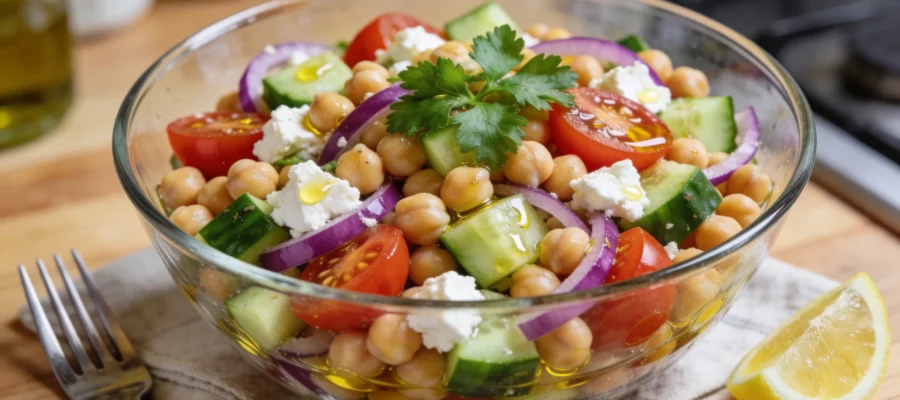
This mediterranean chickpea salad recipe has honestly saved my lunch game more times than I can count. Look, I’m not usually the person who gets excited about salads — they’re often boring, unsatisfying, or require way too much prep work. But this one? It’s different. It’s filling, packed with flavor, and you literally don’t need to turn on a single burner or appliance to make it happen.
Table of Contents
How I Actually Started Making This
So here’s the thing — I stumbled onto this recipe completely by accident last summer. I was desperately trying to meal prep something that wouldn’t wilt into a sad, soggy mess by Wednesday, and I was getting really tired of the same boring turkey and cheese wraps. My neighbor mentioned she’d been making some kind of chickpea situation for lunch, and honestly, I was skeptical. Chickpeas from a can? As the main event? It sounded like diet food disguised as a real meal.
But I was wrong. Really wrong. The first time I made it, I completely overdressed it and turned the whole thing into a mushy disaster. I learned the hard way that you add the dressing gradually — not all at once like I was dumping ranch on iceberg lettuce. The second attempt was better, but I went overboard with the red onion and couldn’t taste anything else for hours. Third time’s the charm though, and now I’ve got it down to a science.
Ingredients mediterranean chickpea salad recipe
The beauty of this mediterranean chickpea salad recipe is that most of these ingredients are probably already hanging out in your pantry or fridge. I’ve made this with whatever I had on hand, and it’s pretty forgiving. The key is getting good quality olive oil and not skimping on the herbs — those two things make all the difference between “meh” and “I’m making this again tomorrow.”
I usually shop for this stuff at my regular grocery store, nothing fancy required. The only thing I’m picky about is the olive oil — get the good stuff, not the giant plastic jug from the bottom shelf. It’s worth the extra few bucks because you’re going to taste it.
Canned chickpeas (2 cans, 15 oz each, drained and rinsed)
These are your protein and the foundation of the whole salad. I always rinse them really well because that canned liquid is kind of salty and weird. Don’t bother with dried chickpeas unless you’re feeling really ambitious — canned works perfectly and this is supposed to be easy. I usually buy whatever brand is on sale, honestly.
English cucumber (1 large, diced)
Adds that perfect fresh crunch and helps bulk up the salad without adding much flavor competition. English cucumbers are better here because they have fewer seeds and the skin is thinner, so you don’t have to peel them. Regular cucumbers work fine too if that’s what you’ve got, but you might want to peel them first.
Cherry tomatoes (2 cups, halved)
These bring sweetness and that bright acidity that makes everything taste more Mediterranean. I like cherry tomatoes better than regular ones here because they hold their shape and don’t make everything soggy. In the winter when tomatoes are terrible, I sometimes skip them entirely or use sun-dried tomatoes instead.
Red onion (1/2 medium, finely diced)
Gives you that sharp bite that cuts through all the other flavors. Start with less than you think you need — you can always add more, but you can’t take it back. I learned that lesson the hard way. If raw onion is too much for you, soak the diced pieces in cold water for 10 minutes first.
Kalamata olives (3/4 cup, pitted and halved)
These are non-negotiable for the authentic Mediterranean flavor. Don’t use those weird canned black olives — they taste like nothing. Kalamata olives are briny and rich and actually add something to the party. You can buy them already pitted to save yourself some time and avoid accidentally breaking a tooth.
Fresh parsley (1/2 cup, chopped)
Brings that fresh, bright herb flavor that makes this taste like you actually know what you’re doing in the kitchen. Flat-leaf parsley works better than curly here — it’s got more flavor and doesn’t get stuck in your teeth as much. Don’t use dried parsley; it’s basically green dust and adds nothing.
Feta cheese (4 oz, crumbled)
Adds creaminess and that tangy, salty flavor that makes everything more interesting. I buy the block of feta and crumble it myself because the pre-crumbled stuff is usually drier and doesn’t taste as good. If you can’t do dairy, just skip it — the salad is still really good without it.
Extra virgin olive oil (1/3 cup)
This is where you don’t want to cheap out. Good olive oil makes this dressing actually taste like something instead of just greasy. You’re going to taste it, so get something you’d be happy to dip bread into. I keep a separate bottle of the good stuff just for salads and finishing dishes.
Fresh lemon juice (3 tablespoons)
Brightens everything up and keeps the flavors from getting too heavy. Always use fresh lemons, not that plastic bottle stuff. You’ll need about 1 large lemon. Roll it on the counter and press down before you cut it — you’ll get more juice out of it that way.
Dried oregano (1 teaspoon)
Adds that classic Mediterranean herb flavor that ties everything together. I actually prefer dried oregano to fresh here because it distributes better and doesn’t get wilty. If you have Greek oregano, even better, but regular oregano from the grocery store works fine too.
Instructions mediterranean chickpea salad recipe
This is honestly the easiest part of making this mediterranean chickpea salad recipe. There’s no cooking, no timing to worry about, and you can’t really mess it up as long as you don’t dump all the dressing on at once like I did that first time. The whole thing takes maybe 15 minutes if you’re being leisurely about it, and most of that is just chopping vegetables.
The salad actually gets better after it sits for a while, so don’t worry if you’re making it ahead. The flavors meld together and the chickpeas absorb some of the dressing. I usually make it in the morning and eat it for lunch, or make a big batch on Sunday for the week.
STEP 1: Prep your chickpeas.
Drain and rinse both cans of chickpeas really well in a colander. I usually give them a good shake and let them drain for a few minutes while I’m chopping everything else. Some people remove the skins, but honestly, life’s too short for that unless you’re trying to impress someone. Pat them dry with a paper towel if you’re feeling fancy.
STEP 2: Dice the cucumber and tomatoes.
Cut the cucumber into bite-sized pieces — about half-inch cubes work well. Halve the cherry tomatoes, or quarter them if they’re really big. Try to keep everything roughly the same size so you get a good mix in each bite. Don’t worry about making it look perfect; this is lunch, not a cooking show.
STEP 3: Handle the red onion.
Dice the red onion as finely as you can manage. Seriously, smaller is better here because big chunks of raw onion will take over the whole salad. If you’re sensitive to raw onion, soak the diced pieces in cold water for 10 minutes, then drain them. This takes out some of the bite but keeps the flavor.
STEP 4: Prep the olives and herbs.
Halve the kalamata olives if they’re not already chopped. Roughly chop the parsley — you want it fine enough to distribute well but not so fine that it disappears. Remove any thick stems but don’t go crazy about it. Crumble the feta into chunky pieces, not tiny crumbs.
STEP 5: Make the simple dressing.
In a small bowl, whisk together the olive oil, lemon juice, oregano, and a good pinch of salt and pepper. Taste it — it should be bright and a little sharp. If it needs more lemon, add it. The dressing should taste a little too intense on its own because it’s going to coat a lot of ingredients.
STEP 6: Combine everything carefully.
In a large bowl, combine the chickpeas, cucumber, tomatoes, red onion, olives, and parsley. Add about half the dressing and toss gently. Add more dressing gradually until everything looks nicely coated but not drowning. You might not need all of it, or you might want to make a little extra.
STEP 7: Finish and let it rest.
Gently fold in the crumbled feta last so it doesn’t break up too much. Taste and adjust — add more salt, pepper, lemon juice, or olive oil as needed. Let it sit for at least 15 minutes before serving so the flavors can get acquainted. It’s even better after an hour or two.
Tips & Variations mediterranean chickpea salad recipe
This keeps really well in the fridge for about 4 days, though the cucumbers start to get a little soft after day 3. I usually eat it straight from the bowl, but it’s also great stuffed into pita bread or served over greens if you want to make it feel more like a traditional salad. The feta makes it creamy enough that you don’t really need anything else, but a dollop of tzatziki never hurt anyone.
Final Thoughts mediterranean chickpea salad recipe
Look, this isn’t going to win any beauty contests, especially after it’s been sitting in a container for a few days. But it tastes better than it photographs, it fills you up without making you sleepy, and it requires zero actual cooking skills. I’ve served this to people who claim they don’t like chickpeas, and they always ask for the recipe.
If you try this mediterranean chickpea salad recipe, let me know how it turns out. I’m always curious if other people’s versions taste as good as they smell when I’m making them, or if my kitchen just has some kind of magic salad-making powers.
Mediterranean Chickpea Salad
This Mediterranean chickpea salad recipe is filling, packed with flavor, and requires no cooking. Perfect for a quick and satisfying lunch.