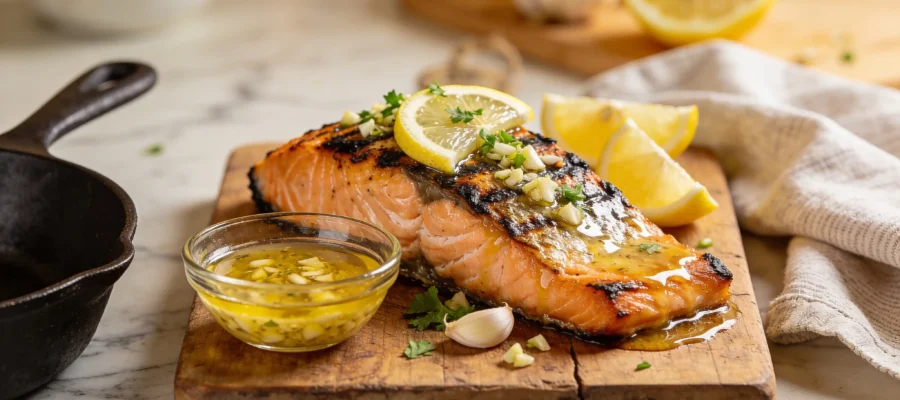
Grilled salmon recipe success comes down to a handful of simple things that nobody ever tells you. After years of cooking fish that stuck to the grates or came out dry as cardboard, I finally cracked the code with this lemon garlic butter glaze that changed everything. The secret isn’t some fancy technique — it’s mostly about timing and having the confidence to trust your eyes over whatever the recipe says. This grilled salmon hits that perfect sweet spot: crispy skin, tender flaky flesh, and a buttery glaze that soaks into all those natural omega-3s.
Table of Contents :
How I Learned to Stop Overcooking Salmon
Let me just admit something right off the bat — I used to be terrified of grilling fish. Absolutely terrified. I’d stand there nervously with my spatula, flipping too early, flipping too late, watching in horror as my beautiful (and let’s face it, expensive) salmon fillets would either stick to the grill or fall through the grates entirely. Total disaster.
The worst was when I hosted my in-laws for dinner. I confidently declared I’d grill some “amazing” salmon, then proceeded to absolutely butcher it. The fish was so overcooked my mother-in-law actually asked if we had any tartar sauce “to help it go down easier.” I’ve never recovered from the emotional damage. But I did become obsessed with figuring out the perfect grilled salmon recipe.
After probably 20+ attempts and way too much money spent at the fish counter, I realized most recipes are lying to you about cook times. They’ll say “8-10 minutes” when really it’s more like 4-6 if your grill is properly heated. Anyway, this lemon garlic butter glaze recipe is what finally made me feel like I wasn’t just cooking edible fish, but actually creating something worth making again.
Ingredients grilled salmon recipe
The beauty of this recipe is that you probably have most of these ingredients already hanging out in your kitchen. Nothing fancy required here. I’m also pretty flexible with the herbs — I’ll list what I think works best, but honestly, use what you’ve got and don’t stress about making a special trip to the store.
The one place I don’t compromise is the salmon itself. Farm-raised works fine, but wild-caught Pacific salmon (especially sockeye or coho) brings this incredible depth of flavor that the farmed stuff just can’t match. It costs more, I know, but if you’re going through the effort of firing up the grill anyway, it’s worth the splurge.
Salmon fillets (4 pieces, about 6 oz each)
Look for pieces that are roughly the same thickness so they cook evenly. I prefer skin-on fillets for grilling — the skin creates a natural barrier between the delicate flesh and those hot grill grates. If you can only find skinless, no big deal, just be extra careful with your timing. Center-cut pieces tend to be more even in thickness than tail pieces.
Olive oil (2 tablespoons)
Nothing fancy needed here. The olive oil serves two purposes: it helps the seasonings stick to the fish before grilling, and it prevents sticking to the grill. I’ve tried using cooking spray directly on the grates instead, and it works okay but tends to flame up. Regular olive oil works better than extra virgin here since it has a higher smoke point.
Butter (4 tablespoons, unsalted)
This is the base of our glaze and what gives that mouthwatering richness. I use unsalted so I can control the sodium level, but salted works fine too — just dial back the added salt. And yes, you need actual butter here — olive oil just doesn’t create the same silky texture or flavor. If you’re dairy-free, a good cultured vegan butter can work in a pinch.
Garlic (4 cloves, minced)
Fresh garlic only, please. The pre-minced stuff in jars just doesn’t bloom the same way in the butter. I’m usually heavy-handed with garlic, but be careful here — too much can overpower the delicate flavor of the salmon. If you absolutely love garlic, add an extra clove, but beyond that you’re entering dangerous territory.
Lemon (1 whole, zest and juice)
The brightness from fresh lemon juice cuts through the richness of the fish and butter. I use both the zest and juice — the oils in the zest add an aromatic quality that the juice alone doesn’t provide. In a desperate situation, bottled lemon juice will work, but you’ll miss out on the complexity that fresh provides. Meyer lemons work beautifully here if you can find them.
Fresh herbs (2 tablespoons, minced)
I typically use a mix of dill and parsley, but thyme, chives, or tarragon all work brilliantly with salmon. Fresh makes a huge difference here, but if you’re using dried herbs, cut the amount to about 2 teaspoons total and add them earlier in the cooking process to rehydrate them. My neighbor grows dill and I basically raid her garden all summer long for this recipe.
Salt and freshly ground black pepper (to taste)
Kosher salt is my go-to for almost everything, including this. The larger flakes give you better control and more even distribution. For pepper, grinding it fresh makes a noticeable difference. I’m pretty generous with both — about 1 teaspoon salt and ½ teaspoon pepper for four fillets, but adjust based on your taste preferences.
Red pepper flakes (¼ teaspoon, optional)
This adds a subtle heat that builds as you eat without overpowering the delicate salmon. It’s completely optional, but I find it adds dimension to the glaze. If you’re not into spice, leave it out entirely. If you want more heat, you could substitute a small amount of minced jalapeño (about ½ teaspoon) in the butter sauce instead.
Instructions grilled salmon recipe
Let’s be real — grilling fish is intimidating the first couple times. It’s not like chicken where you can just slap it on the grill and walk away. Salmon requires your attention, but we’re only talking about 10 minutes total, so don’t panic. The payoff of that crispy exterior and perfect flaky center is absolutely worth it.
My best advice? Make sure your grill is properly preheated and your grates are CLEAN. Like, spend the 3 minutes with the grill brush clean. Fish sticks to dirty grates like nobody’s business. Also, have everything prepped before you start the actual grilling process. Once that fish hits the heat, things move quickly.
STEP 1: Prepare your salmon.
Take the salmon out of the refrigerator about 15-20 minutes before grilling. Cold fish straight from the fridge will cook unevenly and stick to the grill. Pat the fillets completely dry with paper towels — this is crucial! Any moisture will create steam and prevent that beautiful crust from forming. Check for any pin bones by running your finger along the flesh and remove them with tweezers if you find any lurking in there.
STEP 2: Season and oil the salmon.
Brush both sides of the salmon with olive oil, then season the flesh side with salt and pepper. Don’t season the skin yet — we’ll hit that right before it goes on the grill. Be pretty generous with the seasoning; some will inevitably get lost on the grill. I learned the hard way that under-seasoned salmon just tastes flat, no matter how perfectly you cook it. The oil does double-duty: adds flavor and prevents sticking.
STEP 3: Preheat your grill properly.
Heat your grill to medium-high (around 375-400°F). This is not a suggestion — it’s critical. Too hot and the fish will char before cooking through; too cool and it’ll stick and fall apart. Let it preheat with the lid closed for at least 10 minutes. While waiting, scrape the grates thoroughly with a grill brush, then oil them using a folded paper towel dipped in oil (hold it with tongs, not your fingers unless you enjoy minor burns like I apparently do).
STEP 4: Make the lemon garlic butter glaze.
While the grill heats, melt the butter in a small saucepan over medium-low heat. Once it’s melted (but not browning), add the minced garlic and sauté for 30-60 seconds until fragrant but not browned. Browning the garlic will make it bitter — I’ve ruined more than one batch by stepping away at this critical moment. Remove from heat, then stir in the lemon juice, zest, and red pepper flakes if using. Keep this mixture warm but not hot.
STEP 5: Grill the salmon, skin side down FIRST.
Here’s where I differ from most recipes — place the salmon skin-side DOWN first, not flesh-side down. Season the skin with a bit of salt right before placing on the grill. Close the lid and grill for 3-4 minutes until the skin gets crispy. You’ll know it’s ready when the salmon releases easily from the grates when you slide a spatula underneath. If it’s sticking, give it another 30 seconds. Don’t try to force it or you’ll leave half your dinner attached to the grill.
STEP 6: Flip and glaze the salmon.
Carefully flip the salmon onto the flesh side. Immediately brush half of the lemon garlic butter onto the now-exposed crispy skin. Close the lid and grill for just 1-2 minutes more. Seriously, that’s it! The salmon will continue cooking from residual heat, so err on the side of removing it early. For medium doneness, look for an internal temperature of about 125°F — it’ll rise to 130°F as it rests. The center should be slightly translucent if you flake it open.
STEP 7: Rest and add final touches.
Transfer the salmon to a platter and immediately brush the flesh side with the remaining lemon garlic butter. Sprinkle the fresh herbs over the top. Let it rest for 2-3 minutes (not longer or it will cool too much). During this rest, the fish relaxes and the juices redistribute, ensuring every bite is moist. The residual heat will also continue to gently cook the center to perfection. This resting step made the biggest difference in my grilled salmon game.
Tips & Variations grilled salmon recipe
If you don’t have a grill or the weather isn’t cooperating, you can use a grill pan on the stove with almost identical results. Just make sure to get it smoking hot before the fish goes down. For a different flavor profile, try adding a tablespoon of honey or maple syrup to the butter glaze — it creates an amazing caramelization on the fish. Leftover salmon will keep for 2 days in the fridge, but honestly, it’s never as good reheated. I prefer to flake cold leftover salmon into a salad rather than trying to reheat it.
And if you’re wondering about those fancy cedar planks — yes, they’re nice for adding a subtle smoky flavor, but they’re absolutely not necessary for amazing grilled salmon. I’ve used them maybe twice in the dozens of times I’ve made this recipe. Save your money and just master the basic technique first.
Final Thoughts grilled salmon recipe
Look, grilled salmon doesn’t have to be intimidating. The first time might not be perfect, and that’s completely fine. Mine certainly wasn’t. But I promise that this lemon garlic butter glaze is forgiving enough that even slightly overcooked salmon will still taste amazing. And honestly? The worst grilled salmon you make yourself will still be better than most restaurant versions that have been sitting under a heat lamp.
If you try this grilled salmon recipe, please drop me a comment below. I genuinely want to know if that skin-first method worked for you or if you have any tweaks that made it even better. My recipes are always evolving based on what I hear from you guys!
Grilled Salmon with Lemon Garlic Butter Glaze
This grilled salmon recipe features a delicious lemon garlic butter glaze that adds richness and flavor, making it crispy on the outside and flaky on the inside.